Most high-TSH results are mildly elevated — a reading of 5, 6, maybe into the teens. A TSH over 100 is a different category entirely. It’s not a borderline finding to re-check in a few months; it signals severe, long-standing hypothyroidism, and it deserves prompt attention.
What a TSH that high tells you
TSH is the pituitary’s signal to the thyroid. The higher it climbs, the harder the pituitary is shouting at a thyroid that isn’t responding. At over 100 mIU/L, the thyroid is producing very little hormone — you’ll typically see a low T4 alongside it, confirming severe primary hypothyroidism (Myxedema and Coma, NCBI Endotext).
This is the opposite end of the spectrum from the mildly high TSH most people see.
The stat most people don’t know
Severe untreated hypothyroidism can rarely progress to myxedema coma — a life-threatening emergency (reported mortality historically around 30–40%) marked by confusion, very low body temperature, and slowed organ function, usually triggered by infection or other stress in someone with long-standing, undiagnosed low thyroid (StatPearls / NCBI). This is uncommon — but it’s exactly why an extremely high TSH isn’t something to sit on.
What usually causes it
- Long-standing Hashimoto’s thyroiditis — the most common cause; autoimmune damage that’s gone undiagnosed for a long time. (TPO antibodies explained.)
- Stopped or unabsorbed thyroid medication — in someone already diagnosed, this can send TSH soaring.
- Thyroid removal or radiation without adequate hormone replacement.
The common thread: a thyroid that’s been underactive for a while, not a sudden overnight change.
Why it still needs prompt care even if you feel “okay”
People can adapt to slowly worsening hypothyroidism and underestimate how unwell they are — which is part of the danger. A TSH over 100 should be confirmed and acted on quickly, with thyroid hormone replacement guided by a clinician, and any signs of severe illness (marked confusion, very low temperature, extreme drowsiness) treated as urgent.
What this looks like in Bevita
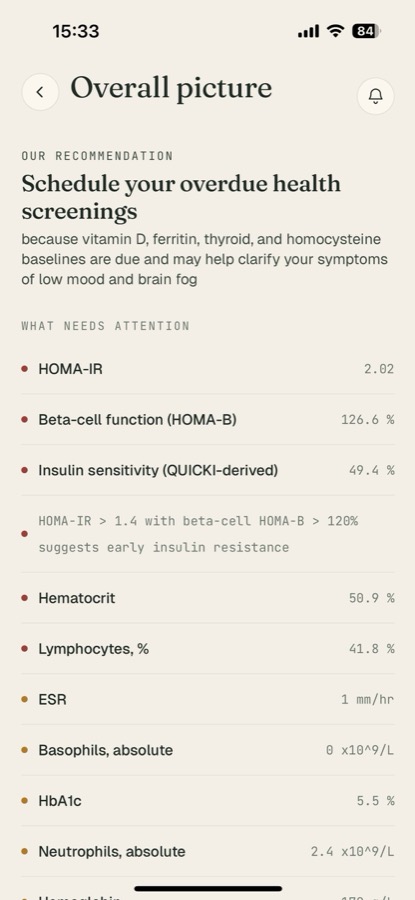
An extremely high TSH rarely appears out of nowhere — it’s usually the end of a long upward climb. Bevita tracks TSH and free T4 across every test, so a steadily rising TSH gets flagged as a trend long before it reaches this severe range. Seeing that trajectory is exactly what helps catch hypothyroidism while it’s still mild — rather than discovering it at 100+.
What to do
- Treat it as prompt, not routine — confirm with a clinician quickly, not “in a few months.”
- Expect thyroid hormone replacement — severe hypothyroidism is treated, and dosing is monitored.
- Watch for red-flag symptoms — marked confusion, very low body temperature, or extreme drowsiness need urgent care.
- Track recovery — TSH falls slowly as treatment takes effect; re-testing follows the trend.
References
- Myxedema and Coma (Severe Hypothyroidism). Endotext, NCBI Bookshelf.
- Elshimy G, et al. Myxedema Coma. StatPearls, NCBI.
- National Institute of Diabetes and Digestive and Kidney Diseases (NIDDK). Hypothyroidism (Underactive Thyroid).
This article is for education and isn’t medical advice. An extremely high TSH should be evaluated promptly by a qualified clinician.
Track your thyroid trend with Bevita
A TSH this high is the end of a long climb — one you can catch early by watching the trend. Upload your labs to Bevita and it tracks TSH and free T4 over time, flagging a rising trajectory before it becomes severe. Download Bevita, upload your thyroid results, and catch the climb early.