Fatigue is one of the most common reasons people book a doctor’s appointment — and one of the most frustrating to get answers for. You’re told you’re “run down,” maybe handed advice about sleep and stress, and sent home. But a surprising share of persistent tiredness has a specific, testable cause sitting in routine blood work that nobody looked at closely.
The problem isn’t usually that the tests don’t exist. It’s that fatigue gets treated as vague, so the right markers never get ordered — or they come back “normal” on a reference range so wide it hides the issue.
The stat most people don’t know
Iron deficiency is the most common nutritional deficiency in the world, affecting up to a quarter of the global population, and it’s the leading cause of anaemia (WHO; Warner & Kamran, StatPearls / NCBI). In menstruating women the rate is far higher. Yet ferritin — the marker that catches it earliest — often isn’t run unless you specifically ask. Add thyroid and vitamin D issues, which are also common and also fatigue-causing, and a large fraction of “unexplained” tiredness turns out to be very explainable.
The 6 markers worth checking
- Ferritin (iron stores) — the earliest sign of low iron, before full-blown anemia. Below ~30 ng/mL can cause fatigue even when your hemoglobin is normal. (What does low ferritin actually mean?)
- TSH (± free T4) — thyroid — an underactive thyroid slows everything down: energy, mood, temperature. A high TSH is a classic hidden cause of tiredness. (High TSH, explained)
- Vitamin D — deficiency is widespread, especially in winter and for indoor workers, and links to fatigue and low mood. (Vitamin D deficiency: signs and tests.)
- Vitamin B12 and folate — needed to make healthy red blood cells; deficiency causes fatigue, brain fog, and sometimes tingling. Common in vegetarians, vegans, and older adults.
- HbA1c / fasting glucose + insulin — blood-sugar swings and early insulin resistance cause the classic afternoon energy crash. Normal glucose can still hide a problem if insulin is running high. (How HbA1c works · how to know if you have insulin resistance)
- CBC (complete blood count) — catches anemia directly (low hemoglobin/hematocrit) and can hint at infection or inflammation.
Why the “normal” trap matters
Here’s the catch that keeps people tired for years: labs often flag a value only when it’s outside a very wide range. A ferritin of 18, a vitamin D of 22, a TSH creeping toward the top of normal — each can be reported as “fine” while still leaving you flat. What actually matters is where you sit within the optimal range, and which direction you’re trending over time. One snapshot rarely tells the story; three tests over a year do.
What this looks like in Bevita
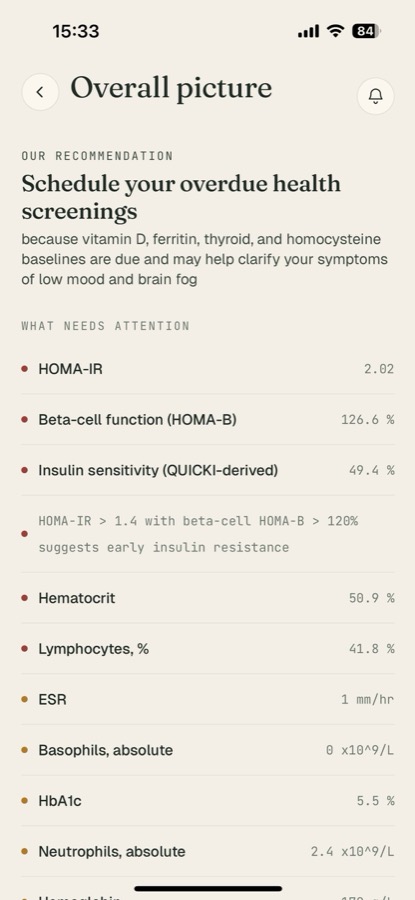
This is Bevita’s “Overall picture” screen. Notice the recommendation at the top: it flags that vitamin D, ferritin, thyroid, and homocysteine baselines are due and connects them directly to reported symptoms of low mood and brain fog — exactly the fatigue-linked markers from the list above. Lower down it surfaces HOMA-IR and HbA1c, tying the blood-sugar angle into the same picture.
That’s the difference between a stack of PDF lab reports and a health record that reads them together: instead of six separate numbers you have to cross-reference yourself, Bevita points at the specific markers most likely behind how you feel, and tells you which are overdue for a re-check.
What to do
- Ask for the full panel above — specifically name ferritin, vitamin D, B12/folate, and fasting insulin, since these are the ones often skipped.
- Get your actual numbers, not just “normal.” Ask for the values so you can see where you land in the range.
- Track them over time. Fatigue causes overlap; a trend is far more revealing than one reading.
- Talk to a clinician before supplementing — more iron or vitamin D isn’t automatically better, and the right move depends on the full picture.
References
- World Health Organization. Anaemia.
- Warner MJ, Kamran MT. Iron Deficiency Anemia. StatPearls, NCBI.
- National Institutes of Health, Office of Dietary Supplements. Vitamin B12 — Health Professional Fact Sheet.
- National Institute of Diabetes and Digestive and Kidney Diseases (NIDDK). Hypothyroidism (Underactive Thyroid).
This article is for education and isn’t medical advice. Discuss your results with a qualified clinician.
Track your energy markers with Bevita
If you’ve been tired for months and keep hearing “everything’s normal,” the missing piece is usually seeing your ferritin, thyroid, vitamin D, and blood sugar together and over time — not one isolated number at a time. Upload your labs to Bevita, and it flags which fatigue-linked markers need attention, ties them to the symptoms you log, and shows you the trend at your next test. Download Bevita, upload your bloodwork, and find out what’s actually behind the tiredness.