Vitamin D is one of the few nutrients where deficiency is genuinely widespread — and one of the easiest to overlook, because its symptoms are vague and its “normal” range is set low. It quietly contributes to fatigue, low mood, and frequent illness in far more people than realize it.
The stat most people don’t know
An estimated 1 billion people worldwide have vitamin D deficiency, and about 50% of the population has insufficiency; in the US roughly 35% of adults are deficient (Sizar et al., StatPearls / NCBI; Cleveland Clinic). Rates run highest in winter, at higher latitudes, and among people with darker skin or mostly indoor lives. Despite that, it’s often not tested unless you ask — and when it is, a level in the low 20s frequently gets reported as “normal.”
Signs of low vitamin D
- Persistent fatigue and low energy
- Low mood, especially in darker months
- Frequent colds or infections — vitamin D supports immune function
- Bone or muscle aches, general weakness
- Hair thinning
- Slow recovery and lingering low-grade unwellness
None of these are specific to vitamin D on their own — which is exactly why deficiency gets missed and blamed on stress or aging. (Several overlap with the markers behind persistent fatigue and brain fog.)
The test and the numbers
Ask for 25-hydroxyvitamin D — 25(OH)D. It’s the standard measure of your vitamin D status.
- Below 20 ng/mL — deficient
- 20–30 ng/mL — insufficient (often reported as “normal”)
- 30–40 ng/mL — adequate
- 40–60 ng/mL — optimal, per many clinicians
- Above 100 ng/mL — too high; possible with over-supplementation
The catch is the same one that hides other deficiencies: the lab’s cutoff is low, so a 24 reads as “fine” while you still feel the effects. What matters is landing in the optimal band — and, since vitamin D shifts with season and supplementation, watching the trend.
Who’s most at risk
- People with limited sun exposure (indoor work, winter, higher latitudes)
- Darker skin tones (more melanin means less vitamin D synthesis)
- Older adults (skin makes less with age)
- People with digestive conditions affecting fat absorption
- Anyone who’s been consistently low and never re-tested
What this looks like in Bevita
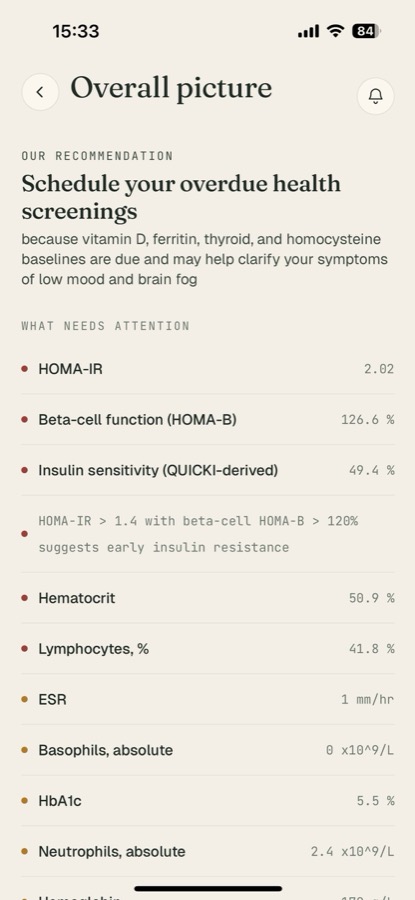
Look at the recommendation on this Bevita “Overall picture” screen: it flags that vitamin D, ferritin, thyroid, and homocysteine baselines are due and ties them directly to reported symptoms of low mood and brain fog — with vitamin D right at the top of that list. Rather than a single number buried in a PDF, Bevita surfaces vitamin D as overdue, connects it to how you feel, and tracks it across tests so you can see whether supplementation is actually moving it into the optimal range.
What to do
- Ask for 25(OH)D by name — it’s not always in a standard panel.
- Get your actual number, not just “normal,” so you can see where you sit versus optimal.
- Re-test after supplementing — vitamin D responds over weeks to months, so check again rather than guessing.
- Don’t mega-dose blindly — more isn’t automatically better, and very high levels carry their own risks.
- Talk to a clinician about the right dose for your level and situation.
References
- Sizar O, Khare S, Goyal A, Givler A. Vitamin D Deficiency. StatPearls, NCBI.
- Cleveland Clinic. Vitamin D Deficiency.
- National Institutes of Health, Office of Dietary Supplements. Vitamin D — Health Professional Fact Sheet.
This article is for education and isn’t medical advice. Discuss your results with a qualified clinician.
Track your vitamin D with Bevita
Vitamin D is easy to fix once you know your number — and easy to ignore when it’s buried in a lab report. Upload your labs to Bevita and it flags vitamin D when it’s below optimal, ties it to the fatigue or low mood you log, and tracks it across every test so you know your supplementation is working. Download Bevita, upload your bloodwork, and stop guessing about your vitamin D.